Skip to Content
chevron-left chevron-right chevron-up chevron-right chevron-left arrow-back star phone quote checkbox-checked search wrench info shield play connection mobile coin-dollar spoon-knife ticket pushpin location gift fire feed bubbles home heart calendar price-tag credit-card clock envelop facebook instagram twitter youtube pinterest yelp google reddit linkedin envelope bbb pinterest homeadvisor angies

How to Source Rings and Jewelry Globally in 2026?

Global sourcing for rings and jewelry in 2026 demands more than attractive prices and polished catalogs. Buyers must examine suppliers, materials, production methods, and delivery records with equal care. A gold ring may look perfect under showroom lights, yet its true value depends on its origin, craftsmanship, and documented journey.

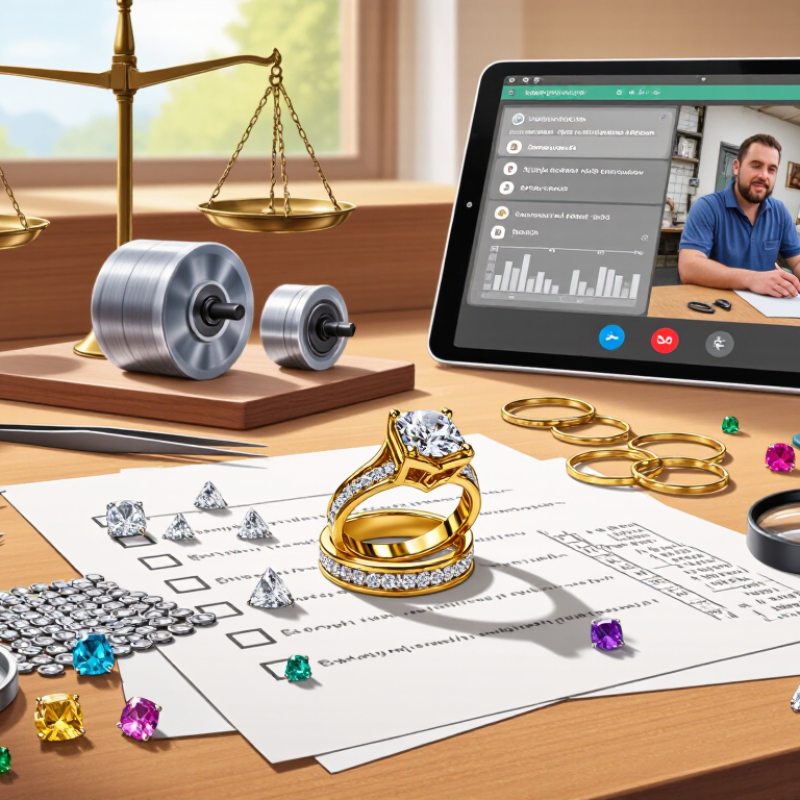
Dr. Leanne Kemp, founder and CEO of Everledger, has said, “The world is moving towards a more transparent supply chain.” Her observation reflects a major shift in the jewelry industry. Retailers now expect verifiable information about recycled metals, responsibly sourced gemstones, factory conditions, and product documentation. Strong suppliers should provide clear invoices, material declarations, laboratory reports, and consistent communication. A short video call can also reveal useful details: the workshop’s benches, polishing tools, packaging area, and production capacity.

Still, no sourcing process is perfect. Certificates can expire. Supplier websites can exaggerate. Even experienced buyers sometimes miss small warning signs. That is why practical verification matters. Request samples, compare weights, inspect stone settings, and confirm lead times before placing larger orders. Ask how a supplier handles defects, repairs, late shipments, and design changes. Their answers often reveal more than a sales presentation.

This guide explains how to source rings and jewelry globally while balancing quality, ethics, cost, and reliability. It focuses on responsible partnerships, lawful trade, and realistic risk control. The goal is not simply to find the cheapest manufacturer. It is to build a supply chain that customers can trust, even when the process becomes complicated.
How to Source Rings and Jewelry Globally in 2026?

Use the WGC’s 2024 4,974.5-Tonne Gold-Demand Baseline for 2026 Sourcing

How to Source Rings and Jewelry Globally in 2026?

For 2026 planning, use the World Gold Council’s 2024 demand baseline: 4,974.5 tonnes of gold. This figure includes jewelry, investment, central-bank, and technology demand. It is a market reference, not a guaranteed forecast. Jewelry demand reached about 1,877 tonnes in 2024, according to Gold Demand Trends: Full Year 2024. That volume supports careful capacity planning for rings, chains, and small gemstone settings.

Start with a quarterly sourcing model. Divide expected orders by metal weight, purity, and production region. A 2-gram ring needs very different purchasing controls from a 12-gram statement ring. Confirm assay methods, recycled-material percentages, lead times, and minimum order quantities before negotiations. Keep a second supplier for critical components. Delays happen.

Use written due diligence. Request origin records, refinery documentation, labor policies, and transaction screening procedures. The OECD Due Diligence Guidance recommends risk-based checks across mineral supply chains. The Responsible Jewellery Council’s 2024 standards also emphasize responsible business practices and chain-of-custody controls. These references improve reliability, but certificates alone are not enough. Review sample documents and verify inconsistencies.

Price planning requires humility. Gold prices can change faster than supplier quotations, especially during currency stress or geopolitical uncertainty. Build scenarios at several metal-price levels, then recalculate margins monthly. The 4,974.5-tonne figure gives scale; it does not remove uncertainty. A sourcing spreadsheet should show metal exposure, shipping time, inspection cost, and payment risk for every purchase order.

Screen Suppliers with OECD Due Diligence and the RJC Code of Practices

How to Source Rings and Jewelry Globally in 2026?

Global jewelry sourcing now requires more than comparing prices and product photos. Suppliers should be screened through the OECD Due Diligence Guidance and the RJC Code of Practices. These frameworks help buyers examine human rights, labor conditions, environmental controls, business ethics, and supply-chain risks.

Ask each supplier for a legal business profile, facility address, ownership details, material declarations, and recent audit evidence. Then trace the ring’s metal and stones through documented custody records.

A polished certificate is not enough.

Visit the workshop when possible. Look at worker protective equipment, ventilation, wage records, and separate material storage. Small details reveal operational discipline.

The World Gold Council reported 4,974.5 tonnes of total gold demand in 2024, including over-the-counter activity. Recycled gold reached about 1,370 tonnes, showing why recycled-material claims need careful verification.

The Responsible Jewellery Council’s 2019 Code also expects documented management systems, not informal promises. Buyers should record supplier risks, corrective actions, review dates, and unresolved questions. Keep the evidence.

Perfect traceability is still difficult. That should be acknowledged.

A supplier may provide incomplete upstream information without obvious misconduct. Pause, investigate, and request a realistic improvement plan. In 2026, responsible sourcing means testing evidence repeatedly, not trusting attractive paperwork.

Verify Diamonds Through the Kimberley Process: Over 99% Conflict-Free

Global ring sourcing in 2026 requires more than comparing prices and designs. Diamond verification should begin with the Kimberley Process, an international certification system for rough diamonds. The Kimberley Process reports that over 99% of the global rough diamond trade is conflict-free. This figure is important, but it is not a complete guarantee for every finished ring.

During supplier checks, request the Kimberley Process certificate, commercial invoice, parcel details, and documented chain of custody. The information should match across every document. A sealed parcel is useful evidence. It is not enough alone. I also compare diamond grading reports, supplier declarations, and shipment records before approving a purchase. Small inconsistencies often reveal weak controls.

The Kimberley Process mainly addresses conflict diamonds linked to armed conflict. It does not fully verify labor conditions, environmental practices, or stone quality. That limitation deserves attention. A responsible sourcing review should include supplier audits, origin questions, and screening against current customs and trade requirements. Ask for clear answers, not polished promises. Keep records for each stone and ring component. Mistakes can happen, especially when several countries handle one order. Independent laboratory testing can reduce uncertainty, though it adds time and cost. In practice, careful verification protects buyers, suppliers, and the integrity of the jewelry trade.

How to Source Rings and Jewelry Globally in 2026?

Verify Diamonds Through the Kimberley Process: Over 99% Conflict-Free

The Kimberley Process Certification Scheme reports that more than 99% of the global rough-diamond trade is conducted through its certification framework and is considered conflict-free. Buyers should still request a valid Kimberley Process certificate and maintain supplier-level documentation for every rough-diamond shipment.

Source: Kimberley Process Certification Scheme. The 99.8% figure is the commonly cited global estimate for rough diamonds traded outside the conflict-diamond category; percentages are rounded.

Apply GIA’s 4Cs and Independent Lab Reports to Every Stone

How to Source Rings and Jewelry Globally in 2026?

Global jewelry sourcing now requires evidence at every step. For each center stone, apply the 4Cs: color, clarity, cut, and carat weight. These factors describe quality, but they do not tell the whole story. A well-cut stone may appear brighter than a heavier stone with poor proportions. Ask for an independent laboratory report before approving payment or production.

Check that the report matches the physical stone. Compare its measurements, weight, shape, clarity features, and any laser inscription. Review treatment disclosures carefully, especially for fracture filling, heating, or clarity enhancement. A report number should be verifiable through the laboratory’s official database. Do not rely on a seller’s photograph alone. Lighting can hide inclusions and distort color.

Keep a sourcing file for every stone. Include the report, supplier invoice, chain-of-custody notes, import documents, and inspection photographs. This creates a clearer audit trail across borders. It also helps resolve mismatched stones before setting them into rings. Yet reports are not price guarantees. They may not confirm geographic origin unless an origin examination was requested. I have seen buyers focus too heavily on grades and overlook durability, setting design, and customer use. That is an easy mistake. Better documentation still needs careful judgment.

How to Source Rings and Jewelry Globally in 2026? - Apply GIA’s 4Cs and Independent Lab Reports to Every Stone

Stone Category GIA 4Cs Applicability Mohs Hardness Refractive Index Specific Gravity Key Treatment Disclosure Independent Report Should Confirm Sourcing Control for 2026
Natural Diamond All four Cs: cut, color, clarity, and carat weight are central grading factors. 10 Approximately 2.417–2.419 Approximately 3.52 HPHT processing, irradiation, fracture filling, or coatings must be disclosed when present. Natural origin, 4Cs assessment, measurements, fluorescence, treatments, and report-number verification. Match the report to the laser inscription or physical measurements; verify whether the stone is natural, laboratory-grown, or treated.
Laboratory-Grown Diamond The 4Cs can describe appearance and quality, but origin must be stated separately. 10 Approximately 2.417–2.419 Approximately 3.52 Post-growth treatments, such as HPHT processing or irradiation, should be recorded. Laboratory-grown origin, growth method where reported, 4Cs characteristics, treatments, and report verification. Keep laboratory-grown and natural inventory in separate stock-keeping units and product descriptions.
Ruby The 4Cs are not a complete colored-stone grading system; color, origin, treatment, clarity, and cut are especially important. 9 Approximately 1.762–1.770 Approximately 4.00 Heat treatment and lead-glass filling can materially affect value and durability; disclose both when applicable. Natural or laboratory-grown status, treatment type, indications of filling, color, and geographic origin if requested. Require a treatment statement for higher-value stones and avoid origin claims without a qualified origin opinion.
Blue or Fancy Sapphire Use the 4Cs as a communication framework, supplemented by color quality, treatment, origin, and optical phenomena. 9 Approximately 1.762–1.770 Approximately 4.00 Heat treatment is common; lattice diffusion and surface diffusion must be clearly identified. Species, natural or laboratory-grown status, treatment, color description, and origin when specifically requested. Use separate purchase thresholds for heated, unheated, and diffusion-treated material.
Emerald The 4Cs alone are insufficient; color, clarity characteristics, treatment, origin, and cut must be evaluated together. 7.5–8 Approximately 1.565–1.602 Approximately 2.72 Oil, resin, or other clarity enhancement must be disclosed; fracture filling affects care requirements. Natural or laboratory-grown status, clarity enhancement level, treatment material where determinable, and origin if requested. Specify “no clarity enhancement,” minor, moderate, or significant enhancement only when supported by the report.
Spinel The 4Cs may help describe appearance, but colored-stone identity, treatment, color, and origin remain essential. 7.5–8 Approximately 1.718–1.738 Approximately 3.60 Treatment status should be checked because some material may be heated or otherwise processed. Mineral identity, natural or laboratory-grown status, detectable treatments, color, and measurements. Use an independent identification report when visual similarity to ruby or sapphire could create a misrepresentation risk.
Tourmaline Apply the 4Cs selectively; hue, tone, saturation, pleochroism, clarity, and cut are more useful for colored-stone decisions. 7–7.5 Approximately 1.614–1.666 Approximately 3.06 Heat treatment and irradiation may occur; the report should state detectable treatment information. Species or variety, natural status, treatment indications, color description, and any requested origin opinion. Inspect for durability risks, inclusions, and directional color before approving calibrated production lots.
Pearl The diamond 4Cs do not apply; evaluate luster, surface quality, shape, color, size, nacre quality, and matching. Approximately 2.5–4.5 Approximately 1.53–1.69, depending on pearl type Approximately 2.60–2.85 Bleaching, dyeing, irradiation, coating, and imitation materials should be identified where present. Cultured or natural origin, mollusk type when determinable, treatment, dimensions, and matching characteristics. Use protective settings for rings because pearl hardness is low; require clear cultured-versus-natural wording.
Moissanite The 4Cs can describe appearance, but the stone must not be represented as diamond; identity and origin are decisive. Approximately 9.25 Approximately 2.65–2.69 Approximately 3.22 Usually laboratory-created for jewelry; any coating or post-production treatment should be disclosed. Material identity, laboratory-created status, measurements, color description, and treatment information. Use precise gemstone naming on invoices, product pages, customs documents, and packaging.
Global sourcing checklist: Confirm stone identity, natural or laboratory-grown status, treatments, carat weight or dimensions, color description, clarity characteristics, country-of-origin claims, and report-number authenticity before approving a purchase order. For diamonds, apply the 4Cs consistently; for colored stones, use the 4Cs only as a supporting framework rather than a complete grading system.
Technical note: Physical-property values are standard approximate ranges and may vary by species, composition, treatment, measurement method, and specimen. An independent laboratory report should take precedence over supplier descriptions for individual stones.

Compare MOQ, Duties, Freight, Lead Times, and Margin Before Ordering

How to Source Rings and Jewelry Globally in 2026?

A low MOQ can look attractive, but unit economics may be misleading. Request quotes at 100, 300, and 1,000 pieces. Compare metal weight, stone setting, plating, packaging, and inspection fees. A supplier offering 100 pieces may charge 18% more per unit. That premium can erase your expected margin.

Duties require careful classification. Confirm the product code, country of origin, customs value, and applicable trade agreement before ordering. Never estimate duty from the supplier’s invoice alone. The World Trade Organization reports that global merchandise trade remains heavily exposed to tariff differences across product categories. Small classification errors can therefore change landed cost. Check the paperwork.

Freight and lead time need a wider buffer in 2026. UNCTAD’s Review of Maritime Transport 2024 notes that maritime shipping carries over 80% of global trade by volume, while route disruptions can increase distance, fuel use, and delivery risk. Compare air, sea, and consolidated freight using landed cost, not freight price alone. The OECD estimates that stronger trade facilitation can reduce trade costs by over 14%. Build a margin model with duties, payment fees, defects, samples, and currency movement. A 65% gross margin can fall below 45% after these costs. That happened in our planning. Recheck every assumption before placing the deposit.

Stay tuned, more blog items coming soon!

Have a Custom Design in Mind?