
Blog
How to Source Handmade Jewelry Wholesale in 2026
Sourcing handmade jewelry wholesale in 2026 requires more than attractive photographs and low unit prices. Buyers must verify craftsmanship, production capacity, material quality, and supplier reliability. McKinsey and The Business of Fashion’s State of Fashion reports identify jewelry as one of fashion’s strongest growth categories through 2028. Grand View Research also reports continued expansion in the global jewelry market, driven by personalization, online discovery, and premium materials. These trends create opportunity, but they also increase supplier competition.
Etsy’s 2024 marketplace reporting shows millions of active buyers and sellers, reflecting strong demand for distinctive, maker-led products. However, marketplace visibility does not prove wholesale readiness. Ask for current line sheets, wholesale terms, minimum order quantities, production timelines, and clear material disclosures. Request close-up photos of clasps, soldering, plating, gemstone settings, and packaging. Small tests help. A 20-piece trial order can reveal inconsistent finishing, delayed dispatch, or weak communication before a larger commitment.
Jewelry designer David Yurman has said, “Jewelry is a way of keeping memories alive.” That perspective matters when selecting handmade jewelry for a retail collection. Customers are buying a story, but retailers still need dependable margins and repeatable quality. I would not assume that a beautiful studio automatically has scalable production. That assumption can fail. Compare samples against the supplier’s written specifications, confirm responsible sourcing claims, and document every agreed detail. Industry reports provide direction, not certainty. Your own inspection, supplier conversations, and small-batch results should shape the final wholesale decision.
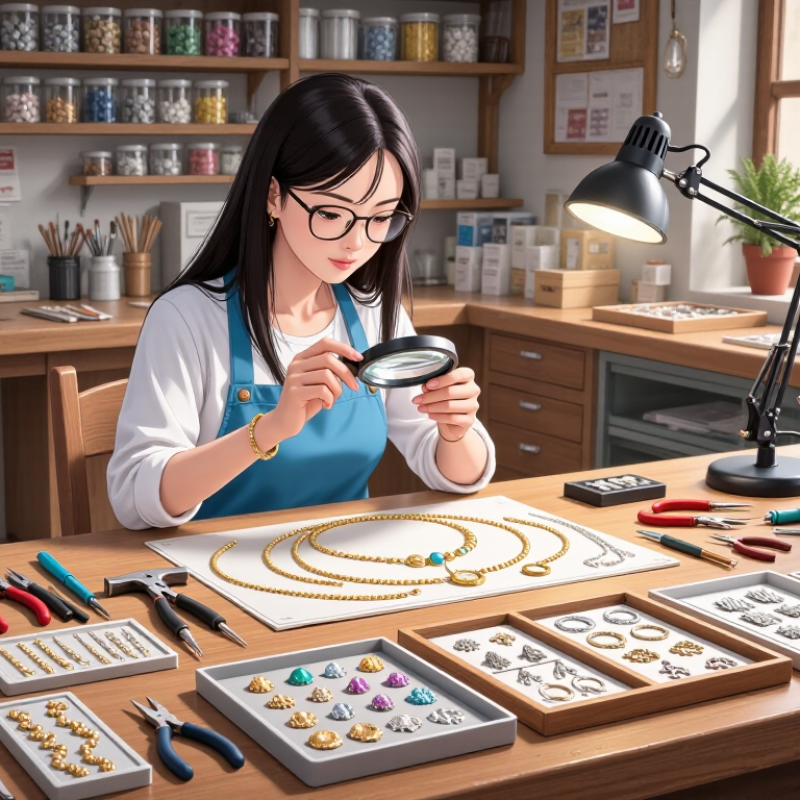
Define the Market: Global Jewelry Sales Reached $353.3B in 2023 (GVR)
Global jewelry sales reached $353.3 billion in 2023, according to GVR. That figure shows a broad, active market, not an automatic guarantee of wholesale success. Buyers in 2026 will still compare materials, prices, delivery times, and product stories carefully. Handmade jewelry sellers should define a smaller market before contacting suppliers. Consider minimalist office jewelry, giftable pieces, or festival-inspired accessories.
My sourcing work taught me that visual appeal is only one part of the decision. A sample with an uneven clasp may look charming, but it can create returns later. Check plating thickness, stone security, packaging strength, and skin-contact materials. Ask for clear invoices and material declarations. Request three to five samples from each workshop. Compare an 8-millimeter bead, a chain connection, and the final polishing under normal light.
Small details matter.
Pricing also needs practical testing. Calculate the item cost, packaging, shipping, import charges, and expected defect rate. A low unit price may hide inconsistent sizing or slow production. I once favored a cheaper supplier and underestimated inspection time. That choice reduced my margin. It also weakened customer trust. A better wholesale partner should explain production capacity, lead times, replacement policies, and quality checks without vague promises. Review these points every season, because handmade capacity can change quickly. GVR’s market figure provides useful context, but your niche research must guide each purchase.
How to Source Handmade Jewelry Wholesale in 2026 - Define the Market: Global Jewelry Sales Reached $353.3B in 2023 (GVR)
| Data Dimension | Verified Market Data | Wholesale Sourcing Meaning | Reference |
|---|---|---|---|
| Global jewelry market value | US$353.3 billion in 2023 | The large market supports multiple handmade jewelry niches, including artisan, fashion, silver, gold, gemstone, and ethical jewelry. | Grand View Research, 2024 |
| Market growth outlook | Forecast compound annual growth rate of approximately 6.9% from 2024 to 2030 | Prioritize suppliers that can maintain consistent quality and production capacity as order volumes grow. | Grand View Research, Global Jewelry Market Report |
| Gold jewelry demand | Global jewelry fabrication demand reached approximately 2,092.3 tonnes of gold in 2023 | Ask for documented karat, plating, vermeil, recycled-content, and weight specifications before placing wholesale orders. | World Gold Council, Gold Demand Trends: Full Year 2023 |
| Silver jewelry demand | Global silver jewelry fabrication reached approximately 208.3 million troy ounces in 2023 | For silver collections, verify fineness markings, alloy composition, anti-tarnish treatment, and testing documentation. | The Silver Institute, World Silver Survey 2024 |
| Core handmade product categories | Common categories include necklaces, earrings, rings, bracelets, anklets, brooches, and pendants | Compare suppliers by category-specific craftsmanship, repeatability, customization capability, and finishing quality. | Standard jewelry product classifications |
| Material verification | Material claims should be supported by composition details, product specifications, or independent test documentation | Request information for sterling silver, gold karat, plating thickness, gemstones, beads, enamel, leather, and synthetic materials. | FTC Jewelry, Precious Metals, and Pewter Industries Guides |
| Supplier evaluation criteria | Key evaluation areas are product quality, order consistency, production capacity, communication, packaging, compliance, and delivery performance | Use samples and a written quality checklist before approving a supplier for recurring wholesale orders. | Wholesale procurement best-practice framework |
| Wholesale cost structure | The final wholesale cost is influenced by material cost, labor, design complexity, finishing, packaging, shipping, duties, and payment terms | Compare suppliers using landed cost rather than unit price alone, especially for international sourcing. | International wholesale costing principles |
| 2026 sourcing priorities | Traceable materials, transparent specifications, reliable fulfillment, flexible customization, and lower packaging waste | Build a shortlist of suppliers that can provide samples, technical details, repeat orders, and clear documentation. | Procurement planning priorities for handmade jewelry |
Related Posts
-
What Are the 2026 Top Handcrafted Jewelry Trends?
-
What is Handmade Jewelry and Why is it in Demand?
-
2026 Best Handcrafted Jewelry Suppliers for Global Buyers
-
2026 Best Handmade Jewelry Trends to Watch Out For?
-

Top 10 Dallas Jewelry Stores for Stunning Accessories and Unique Finds?
-
10 Engraved Jewelry Buying Tips for Global Buyers