
Skip to Content
chevron-left chevron-right chevron-up chevron-right chevron-left arrow-back star phone quote checkbox-checked search wrench info shield play connection mobile coin-dollar spoon-knife ticket pushpin location gift fire feed bubbles home heart calendar price-tag credit-card clock envelop facebook instagram twitter youtube pinterest yelp google reddit linkedin envelope bbb pinterest homeadvisor angies

Top 10 2.8 Inch TFT LCD Display Types for Global Buyers

Selecting a 2.8 Inch TFT LCD Display involves more than checking diagonal size. Buyers must compare resolution, viewing angle, brightness, interface, touch performance, and supply stability. A panel that looks sharp indoors may become unreadable beside a sunlit window. Small details matter.

Omdia’s display market research continues to identify automotive, industrial, medical, and portable electronics as important demand areas for small and medium displays. MarketsandMarkets also projects continued growth in the TFT LCD market, supported by connected devices, control equipment, and human-machine interfaces. These reports do not isolate every 2.8-inch model, but they reveal a practical trend: compact displays remain relevant where space, cost, and readable information must coexist.

Display industry analyst Ross Young has repeatedly highlighted the importance of balancing display specifications with application requirements. His commonly cited observation is, “Size, resolution, brightness, and power are all trade-offs.” That sentence deserves attention. It is easy to chase higher resolution and forget heat, lifetime, or driver compatibility. I have seen compact screens fail in evaluation because their connectors did not match the host board. A beautiful image was not enough.

This guide reviews the Top 10 2.8 Inch TFT LCD Display types for global buyers. It considers IPS and TN structures, resistive and capacitive touch options, sunlight-readable designs, SPI and RGB interfaces, and industrial temperature ratings. It also examines customization, documentation, sample support, and production consistency. Some rankings may change with your project. That is the honest limitation. The best display is rarely universal.
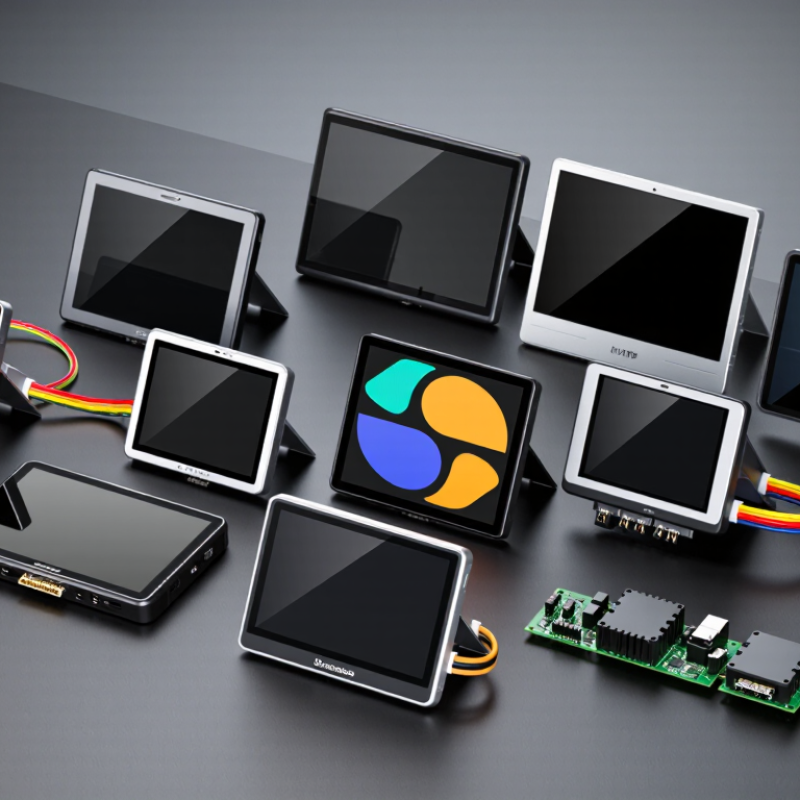
Top 10 2.8 Inch TFT LCD Display Types for Global Buyers

What Defines a 2.8-Inch TFT LCD Display

A 2.8-inch TFT LCD display is defined by more than its diagonal measurement. The 2.8-inch figure describes the active viewing area from corner to corner. It does not include the bezel, flexible cable, or mounting frame.

In practical testing, resolution strongly affects image clarity. Many 2.8-inch modules use 240 × 320 pixels, while other versions offer different formats. A higher pixel count can sharpen small text, but it may also increase processing demands. Panel technology matters too. IPS panels usually provide wider viewing angles, while TN panels can support lower-cost designs. Brightness, contrast, response time, and backlight uniformity should be checked under real lighting conditions.

Interface selection is equally important. SPI can simplify wiring, but screen refresh may become slower with detailed graphics. Parallel interfaces often move data faster, although they require more pins. Touch capability is separate from the TFT panel itself. It may use resistive or capacitive sensing, with different durability and calibration needs. Voltage compatibility must also be verified carefully. A display marked for 3.3-volt logic may not safely accept every controller signal. I have seen projects fail because the mechanical size was correct, but the connector orientation was wrong. Small details matter. Buyers should request optical data, electrical limits, drawing files, and sample units before approving volume production. Specifications are useful, but hands-on inspection still exposes weaknesses.

Ten Common 2.8-Inch TFT LCD Display Types

Top 10 2.8 Inch TFT LCD Display Types for Global Buyers

Ten Common 2.8-Inch TFT LCD Display Types

The 2.8-inch TFT LCD market includes ten practical types: standard TN, IPS, VA, transflective, sunlight-readable, high-brightness, resistive-touch, capacitive-touch, wide-temperature, and SPI-interface displays. Each type serves a different design problem. TN panels usually cost less and respond quickly. IPS panels provide wider viewing angles and more stable colors. VA panels offer deeper contrast, but motion performance can vary. Transflective screens support outdoor instruments by combining reflective and transmissive viewing.

Industry reports give useful market context. The 2024 Display Supply Chain Consultants Display Industry Outlook identifies LCD as a continuing mainstream display technology across industrial and consumer equipment. MarketsandMarkets also reports steady growth in TFT-LCD applications, supported by automation, medical devices, and smart instrumentation. These reports do not isolate 2.8-inch modules, so buyers should avoid treating broad market data as a direct product guarantee. That distinction is often missed.

Tips: Check the controller, viewing angle, brightness, operating temperature, and touch method before sampling. A 500-nit screen may still look weak behind dark glass. Resistive touch can work better with gloves, while capacitive touch feels smoother. SPI reduces wiring, but refresh speed may disappoint on graphic-heavy interfaces. Field testing matters. One sample is not enough. Suppliers should verify color consistency, connector strength, and backlight heat under real enclosure conditions.

Key Specifications for Comparing Display Variants

Top 10 2.8 Inch TFT LCD Display Types for Global Buyers

When comparing 2.8 inch TFT LCD variants, resolution should match the viewing task. A 240 × 320 panel suits basic meters, handheld controllers, and compact instruments. A 320 × 480 panel provides sharper icons and denser data. However, higher pixel density can increase processing demand and power consumption. A brighter screen is useful outdoors, but it may generate more heat.

Interface selection also affects integration time. SPI needs fewer pins and works well in space-limited designs. Parallel interfaces can refresh graphics faster, but they require more board connections. Check the controller compatibility, color depth, refresh behavior, and cable length. Touch options deserve equal attention. Resistive touch supports gloves and pointed tools. Capacitive touch feels smoother, yet thick cover glass can reduce sensitivity.

Physical specifications often decide field performance. Review the active area, bezel size, mounting holes, connector position, and panel thickness. For outdoor equipment, measure brightness in actual sunlight, not only in a dark test room. Wide viewing angles help shared displays, while a narrow angle may reduce cost. Temperature ratings should match storage and operating conditions. They are not the same.

In practical evaluations, I test startup behavior, backlight uniformity, touch accuracy, and image stability after repeated power cycles. Small defects matter. A slightly uneven corner may become distracting. Engineers should also request sample units before volume purchasing. One overlooked issue is connector strain during assembly; it can cause intermittent images and expensive rework.

Top 10 2.8 Inch TFT LCD Display Types for Global Buyers - Key Specifications for Comparing Display Variants

No. Display Type Typical Resolution Aspect Ratio Color Depth Viewing Direction Touch Option Common Interface Typical Brightness Typical Applications
1 Standard Portrait TFT LCD 240 × 320 pixels 3:4 262K or 65K colors 6 o'clock or 12 o'clock Resistive or capacitive SPI, 8080 parallel, or RGB 250–500 cd/m² Handheld instruments, controllers, meters
2 Landscape TFT LCD 320 × 240 pixels 4:3 262K or 16.7M colors 6 o'clock or wide-angle variants Optional resistive or capacitive SPI, RGB, or MCU parallel 250–600 cd/m² Vehicle panels, control terminals, test equipment
3 Square TFT LCD 240 × 240 pixels 1:1 262K or 16.7M colors Wide-angle or specified viewing direction Capacitive, resistive, or none SPI or RGB 300–700 cd/m² Smart controls, wearables, compact instruments
4 High-Resolution Portrait TFT LCD 480 × 640 pixels 3:4 16.7M colors Wide-angle IPS-type options Projected capacitive or none MIPI DSI, RGB, or SPI 300–800 cd/m² Medical instruments, portable terminals, imaging devices
5 IPS TFT LCD 240 × 320 or 320 × 240 pixels 3:4 or 4:3 262K or 16.7M colors Typically up to 80°–89° per direction Capacitive, resistive, or none SPI, RGB, or MCU parallel 300–800 cd/m² User interfaces requiring consistent color and viewing angles
6 TN TFT LCD 240 × 320 or 320 × 240 pixels 3:4 or 4:3 262K or 65K colors Typically narrower; direction must be specified Optional resistive or none SPI, RGB, or MCU parallel 250–600 cd/m² Cost-sensitive embedded equipment and simple meters
7 Resistive Touch TFT LCD 240 × 320 or 320 × 240 pixels 3:4 or 4:3 262K or 65K colors Panel-dependent 4-wire or 5-wire resistive touch SPI, parallel, or touch controller interface 250–500 cd/m² Industrial panels operated with gloves or styluses
8 Projected Capacitive Touch TFT LCD 240 × 320 or 320 × 240 pixels 3:4 or 4:3 262K or 16.7M colors Wide-angle options commonly available Projected capacitive, single or multi-touch SPI, I²C, USB, RGB, or MIPI DSI 300–800 cd/m² Consumer interfaces, smart appliances, portable devices
9 Sunlight-Readable TFT LCD 240 × 320 or 320 × 240 pixels 3:4 or 4:3 262K or 16.7M colors Wide-angle or optimized viewing direction Optional touch layer SPI, RGB, or MCU parallel 800–1,500 cd/m² Outdoor instruments, navigation devices, field service equipment
10 Sunlight-Readable TFT LCD with Optical Bonding 240 × 320 or 320 × 240 pixels 3:4 or 4:3 262K or 16.7M colors Wide-angle configurations available Capacitive or resistive touch SPI, RGB, or MCU parallel 600–1,500 cd/m² Rugged outdoor equipment, industrial HMIs, transportation systems

Note: Specifications are typical market ranges for 2.8-inch TFT LCD configurations. Actual parameters such as active area, outline dimensions, contrast ratio, operating temperature, connector pinout, and interface timing should be confirmed against the selected module's technical datasheet.

Choosing the Right Display for Different Applications

Top 10 2.8 Inch TFT LCD Display Types for Global Buyers

Choosing the Right Display for Different Applications

A 2.8 inch TFT LCD can suit handheld meters, medical instruments, control panels, and compact test equipment. The right choice depends on operating conditions, not appearance alone. For simple menus and numeric input, a resistive touch display offers reliable control with gloves or a stylus. Capacitive touch feels faster and supports modern interfaces, but wet surfaces can reduce accuracy.

For outdoor instruments, high-brightness, transflective, or sunlight-readable displays improve visibility under direct light. IPS panels provide wider viewing angles, which helps when several users inspect one screen. TN panels may reduce cost and response time, although their viewing angles are narrower. Wide-temperature versions are better for vehicles, industrial cabinets, and equipment used in cold storage areas.

Interface selection also matters. SPI displays simplify wiring for low-speed dashboards, while parallel RGB interfaces support richer graphics and faster updates. High-resolution types suit maps, waveforms, and detailed images. Standard-resolution panels may work better for status screens with limited processing power. Touchscreen, non-touch, anti-glare, and optically bonded versions create additional choices.

In practical testing, brightness alone is not enough. A screen may look strong in a showroom but become difficult to read behind protective glass. Engineers should test the complete assembly, including the cover, cable, enclosure, and power supply. I have seen projects choose a beautiful panel before checking connector space. That mistake can force an expensive redesign. Viewing angle, color stability, lifetime, and stable supply should be verified with samples.

Global Buyer Checks for Compatibility and Supply

Choosing among 2.8 inch TFT LCD display types starts with the host device, not the catalog image. Global buyers should match resolution, active area, connector position, and mounting holes against the enclosure drawing. SPI, RGB, and MCU interfaces can look similar while requiring different software and bandwidth. Check the controller, pinout, logic voltage, backlight current, and touch method in the datasheet. Small mismatches become expensive.

Request a working sample before approving volume production. Test it with the actual cable, power rail, firmware, and window glass. Measure brightness and color under the intended indoor or outdoor lighting. Wide-temperature use needs more than a stated range; confirm startup, contrast, and response at both limits. Viewing-angle data should be checked from the installation direction, especially for portrait equipment. A two-millimeter bezel error can stop assembly.

Supply checks matter just as much as optical performance. Ask for a current datasheet, inspection standard, sample lead time, monthly capacity, and change-notification process. Compare several batches for dead pixels, uneven backlight, connector strength, and touch accuracy. Confirm that packaging protects the glass from pressure and humidity during international transport. Do not rely on one sample. Buyers may approve a display before freezing the interface and enclosure, which invites redesigns. Record every tolerance, test condition, and acceptance limit before placing the order.

Stay tuned, more blog items coming soon!

Have a Custom Design in Mind?