
Blog
How to Source Bridal Jewelry for Women Globally?
Sourcing women’s bridal jewelry for a global market requires more than selecting attractive rings, earrings, or necklaces. It demands careful judgment. Buyers must examine metal quality, gemstone grading, supplier transparency, production capacity, and cultural preferences. A delicate gold pendant may suit one bride, while another may prefer a bold diamond necklace with traditional symbolism. Details matter.
Bridal jewelry designer Neil Lane offers a useful perspective: “Jewelry should be personal, emotional, and timeless.” This principle helps guide international sourcing decisions. A successful collection should reflect real bridal experiences, not only seasonal trends. Suppliers should provide clear material specifications, credible gemstone documentation, consistent photographs, and realistic delivery schedules. Small differences can reveal larger problems. A clasp that feels weak, uneven prongs, or unclear plating information should never be ignored.
Global sourcing also requires practical empathy. Wedding customs, skin tones, budgets, sizing systems, and gift traditions vary widely. Responsible brands should evaluate working conditions and maintain traceable supply chains. They should also communicate honestly about recycled metals, laboratory-grown stones, and natural gemstones. No supplier is perfect. Even experienced buyers can overlook a delayed shipment or underestimate regional demand. That is why sample testing, independent inspections, and written quality standards remain essential.
This guide explains how to compare suppliers, assess product quality, control costs, and build dependable partnerships across markets. It also considers a difficult question: can a piece feel luxurious while remaining ethically and commercially responsible? The answer is not always simple. Careful sourcing makes the process more credible.
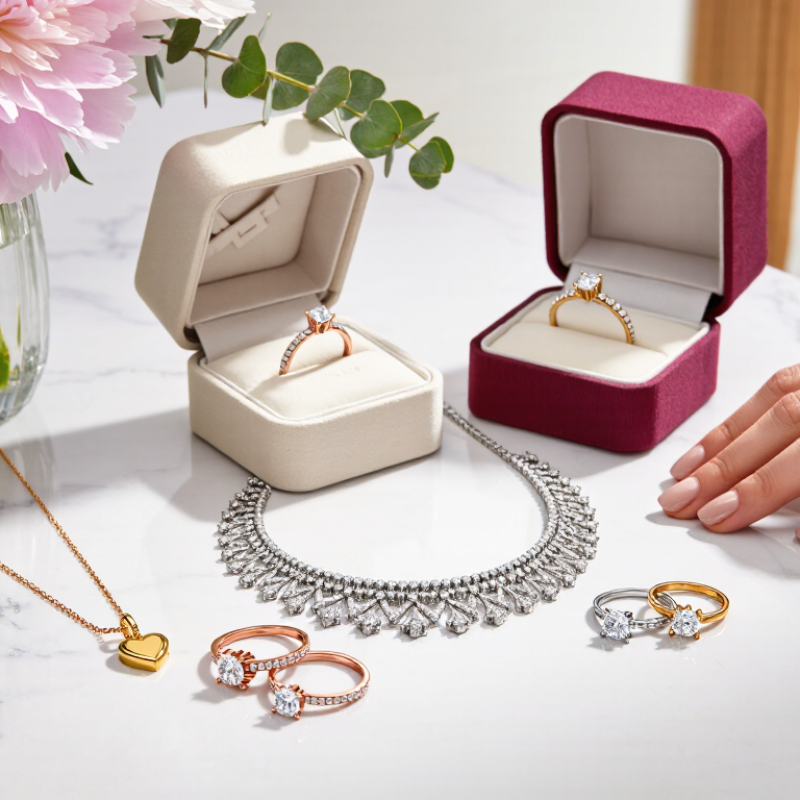
Define Bridal Jewelry Categories and Buyer Requirements
How to Source Bridal Jewelry for Women Globally?
Bridal jewelry sourcing starts with clear categories, not attractive photographs. Separate engagement rings, wedding bands, earrings, necklaces, bracelets, and hair jewelry. Each category serves a different buying moment. The Knot’s 2023 Real Weddings Study surveyed nearly 10,000 couples and reported an average U.S. engagement ring spend of about $5,500. This figure is useful, but it cannot represent every market. Buyers in South Asia may prioritize gold weight, while European customers may focus on understated design and traceability.
Define requirements through measurable details. Record metal type, purity, stone size, setting security, adjustable sizing, packaging, lead time, and return conditions. Ask whether the piece suits humid ceremonies, outdoor photography, or repeated wear. The World Gold Council’s Gold Demand Trends 2024 reported global jewellery demand of approximately 1,877 tonnes in 2023. High gold prices influenced purchasing decisions. Therefore, lightweight structures and mixed-metal options can widen accessibility. However, a lower weight may reduce the visual richness some buyers expect. That tension deserves testing.
Tips: Build three buyer profiles before contacting suppliers. Include a budget-led bride, a heritage-focused bride, and a minimalist bride. Request physical samples, not only digital renders. Check clasp strength, stone alignment, plating consistency, and skin-contact comfort. A catalog can hide small defects. I have seen sourcing plans overvalue trend data and undervalue fit. That is an avoidable weakness. Collect regional feedback before finalizing quantities.
How to Source Bridal Jewelry for Women Globally? - Define Bridal Jewelry Categories and Buyer Requirements
A practical sourcing framework covering bridal jewelry categories, material specifications, buyer expectations, and global procurement considerations.
| Bridal Jewelry Category | Typical Design and Use | Common Materials and Specifications | Key Buyer Requirements | Sourcing and Quality Checks | Global Market Considerations |
|---|---|---|---|---|---|
| Engagement Rings | Solitaire, halo, three-stone, cluster, and contemporary minimalist styles worn as a proposal or engagement symbol. | Platinum 950, 18-karat gold, 14-karat gold, or sterling silver for lower-priced fashion ranges. Diamond, sapphire, moissanite, and other gemstones are commonly used. | Accurate ring sizing, secure prongs, balanced stone setting, disclosed gemstone identity, documented carat weight, and clear metal fineness. | Check symmetry, stone security, polish, setting alignment, hallmark accuracy, gemstone treatment disclosure, and consistency between product specifications and delivered goods. | White metals and colorless stones have broad international appeal. Size conversion charts are important because ring-size systems differ by country. |
| Wedding Bands | Plain, textured, engraved, eternity, half-eternity, contoured, and matching bands designed to pair with an engagement ring. | Common gold fineness includes 14-karat gold at approximately 58.5% gold and 18-karat gold at 75% gold. Platinum jewelry is commonly marked 950 when it contains 95% platinum. | Comfortable interior profile, durable construction, accurate width, smooth edges, optional engraving, and compatibility with the engagement-ring setting. | Verify band thickness, roundness, solder joints, engraving accuracy, metal purity, surface finish, and resistance to snagging during everyday wear. | Stackable bands are useful for customers seeking flexible combinations. Wider bands generally require more precise sizing than narrow bands. |
| Bridal Earrings | Studs, drop earrings, chandelier earrings, hoops, and detachable designs coordinated with the wedding dress and hairstyle. | Gold, platinum, sterling silver containing 92.5% silver, freshwater pearls, cultured pearls, diamond, cubic zirconia, and colored gemstones. | Lightweight construction, secure backs, comfortable posts, balanced weight, skin-friendly components, and measurements stated in millimeters. | Test clasp operation, post alignment, pair matching, stone security, coating uniformity, and total weight per pair. | Pearls and delicate drop styles are popular for classic ceremonies. Nickel restrictions and sensitivity concerns should be addressed for markets with strict consumer-safety expectations. |
| Bridal Necklaces | Pendant necklaces, chokers, station necklaces, collar necklaces, and statement pieces designed for different necklines. | Gold, platinum, sterling silver, pearls, diamond, sapphire, cubic zirconia, and glass or crystal elements for costume collections. | Adjustable length, secure clasp, balanced pendant weight, chain durability, low snag risk, and accurate chain and pendant dimensions. | Inspect links, jump rings, clasp strength, soldering, pendant balance, surface finish, and necklace length after adjustment. | Shorter styles suit open necklines, while longer pendants work with simple gowns. Adjustable extenders can reduce inventory complexity across regions. |
| Bridal Bracelets and Bangles | Tennis bracelets, chain bracelets, cuff bracelets, charm bracelets, rigid bangles, and coordinated wrist sets. | Gold, platinum, sterling silver, diamond, sapphire, cubic zirconia, enamel, and polished or textured metal finishes. | Secure closure, correct wrist circumference, flexible articulation, comfortable edges, reliable stone settings, and resistance to twisting. | Perform clasp pull tests, inspect hinges and safety chains, check stone alignment, measure inner circumference, and verify plating or coating consistency. | Bangles may require separate size options, whereas chain bracelets can use adjustable closures. Conservative and ornate designs should be offered in balanced proportions. |
| Hair Jewelry and Headpieces | Tiaras, combs, hairpins, vines, clips, and forehead ornaments used with updos, veils, braids, or loose hairstyles. | Plated base metals, sterling silver, gold-filled components, freshwater pearls, crystals, rhinestones, enamel, and textile-covered wires. | Light weight, stable attachment, smooth tips, flexible positioning, no sharp edges, and reliable fastening without damaging hair or fabric. | Check wire fatigue, solder points, attachment strength, exposed edges, color consistency, and packaging protection against bending. | Flexible vines and adjustable combs support different hairstyles and head sizes. Neutral metallic colors generally coordinate with a wider range of dresses. |
| Pearl Bridal Jewelry | Pearl strands, pearl studs, drop earrings, bracelets, hair accessories, and mixed pearl-and-metal designs. | Freshwater, Akoya, South Sea, and Tahitian cultured pearls, together with gold, platinum, or sterling silver findings. | Disclosure of cultured or imitation status, pearl size, shape, color, luster, surface quality, matching quality, and secure pearl attachment. | Assess luster, nacre appearance, surface blemishes, drilling quality, uniformity, knotting or stringing, and protection from abrasion during shipping. | Pearl color preferences vary by ceremony and culture. Clear product descriptions help distinguish natural, cultured, imitation, and treated pearls. |
| Colored-Gemstone Bridal Jewelry | Sapphire engagement rings, ruby accents, colored-stone earrings, birthstone-inspired pieces, and contrast-color bridal sets. | Sapphire and ruby have a Mohs hardness of 9; emerald commonly ranges from 7.5 to 8 and may require additional care. Treatments should be disclosed. | Accurate gemstone name, natural or laboratory-grown status, treatment disclosure, color description, carat weight, origin information when claimed, and care instructions. | Review gemstone reports when required, check color consistency, inspect inclusions and fractures, verify setting security, and avoid unsupported origin claims. | Color symbolism and preferred gemstones differ across regions. Offer neutral descriptions and culturally adaptable color assortments rather than relying on one bridal tradition. |
| Fashion and Plated Bridal Jewelry | Affordable statement sets, crystal jewelry, cubic-zirconia pieces, layered necklaces, and coordinated accessories for one-day or occasional wear. | Brass, stainless steel, alloy, sterling silver, gold-tone or rhodium-tone plating, cubic zirconia, glass crystals, and synthetic pearls. | Transparent base-metal and plating descriptions, consistent color, affordable minimum order quantities, attractive packaging, and clear care instructions. | Test coating adhesion, check discoloration, inspect glue and stone settings, review sharp edges, and conduct restricted-substance testing where required. | Useful for price-sensitive collections and bridesmaid gifting. Product pages should not imply solid precious-metal content when the item is plated. |
| Bridesmaid and Coordinated Sets | Matching earrings, necklaces, bracelets, hair accessories, and small gifts coordinated by color, finish, or design theme. | Sterling silver, plated metals, stainless steel, crystal, cubic zirconia, synthetic or cultured pearls, and textile or enamel accents. | Consistent appearance across units, flexible sizing, gift-ready packaging, repeat-order availability, and dependable delivery timing. | Approve a pre-production sample, compare color across batches, count every component, inspect packaging, and confirm replacement-unit policies. | Sets should support different dress colors and skin tones. Mixed-size ordering and individual replacement options reduce fitting and service problems. |
| Universal Buyer Requirements | Applies across fine jewelry, demi-fine jewelry, and fashion bridal collections. | Product specifications should state metal type and fineness, gemstone identity, dimensions, weight, treatments, plating details, and country-specific labeling information where applicable. | Reliable quality, transparent pricing, manageable minimum order quantities, sample approval, production lead time, packaging, after-sales support, and secure shipping. | Request technical drawings, material declarations, inspection standards, batch photographs, quality-control records, and a written process for defects, returns, and replacements. | Before importing, confirm customs requirements, consumer-product safety rules, precious-metal marking rules, restricted substances, tax treatment, and documentation requirements in the destination market. |
| Sustainability and Ethical Sourcing | Traceable materials, recycled metals, laboratory-grown gemstones, responsible packaging, and longer-lasting designs that reduce replacement demand. | Recycled precious metals, laboratory-grown diamonds, recycled paper packaging, low-impact coatings, and documented gemstone supply-chain information. | Evidence-based claims, supplier traceability, treatment disclosure, responsible labor practices, recyclable packaging, and avoidance of misleading environmental language. | Request certificates or chain-of-custody documents when applicable, audit labor and environmental practices, verify recycled-content claims, and keep records for marketing statements. | Sustainability expectations are increasing globally, but accepted claims and disclosure rules vary. Use precise, verifiable wording for every market. |
Related Posts
-

2026 How to Choose the Perfect Bridal Jewelry for Your Wedding Day?
-
2026 Top Trends in Women's Bridal Jewelry for Every Style and Budget?
-
Top 10 Women's Bridal Jewelry Trends for 2026?
-
Why Choosing the Right Women's Bridal Jewelry Matters?
-
What is Women's Bridal Jewelry and How to Choose the Perfect Pieces
-
2026 How to Choose Women's Bridal Jewelry for Your Perfect Wedding Day?