How to Choose the Best Mens Fashion Belts?
Choosing the right Mens Fashion Belts is more than matching leather with trousers. A belt controls proportion, comfort, and the visual finish of an outfit. The wrong width can make tailored trousers look awkward. A poor buckle can overpower a simple shirt.
Industry research supports this practical view. The McKinsey–BoF State of Fashion 2025 report describes a cautious, value-conscious fashion market. Shoppers increasingly expect durability, versatility, and clear product value. Grand View Research also identifies fashion accessories as a growing global category, supported by online shopping and premium product demand. These findings suggest that belt selection should focus on repeated wear, not short-lived styling trends. That sounds obvious, yet many buying guides overlook it.
Material matters first. Full-grain leather usually develops visible character, including darker edges and soft creases, after regular use. However, “genuine leather” can describe several quality levels. Buyers should inspect stitching, edge finishing, buckle weight, and adjustment holes. A belt that bends neatly without cracking is more useful than one with a dramatic logo. The Accessories Council and retail product standards also emphasize accurate material descriptions, which makes transparent labeling worth checking.
This guide compares width, leather, color, buckle design, sizing, and construction. It also considers formal offices, denim, travel, and everyday movement. Some recommendations remain subjective. Personal comfort still wins. A perfect-looking belt that digs into the waist is not a smart purchase. The best choice is the one that quietly performs, ages well, and works with more than one outfit.
Understanding Belt Materials, Construction, and Long-Term Durability
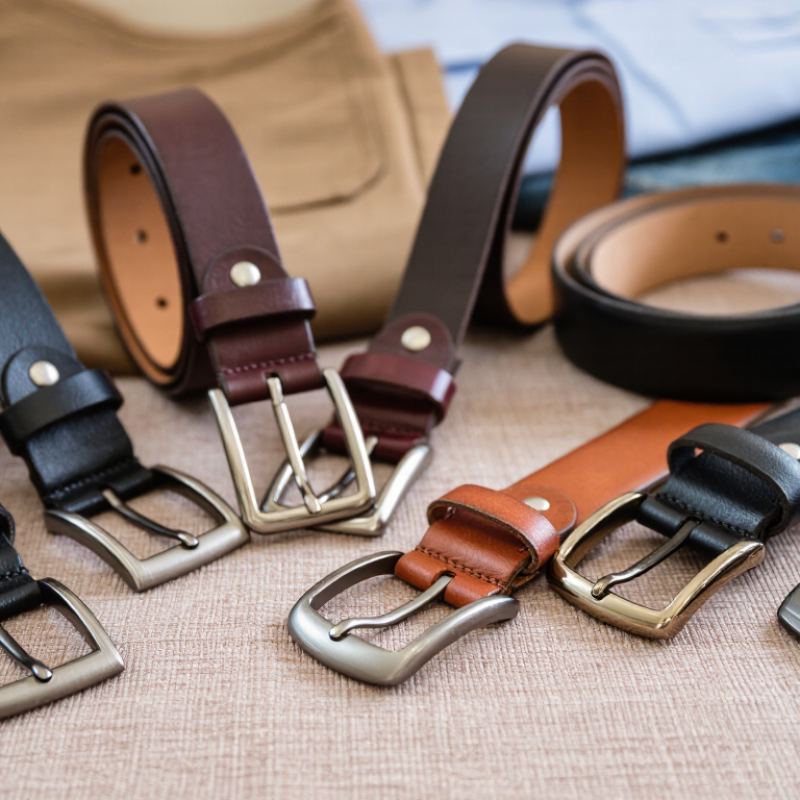
Choosing the best men’s fashion belt starts with its material. Full-grain leather usually develops character through daily wear. Its surface may show small marks, pores, and color changes. These details often indicate natural material, not poor quality. Corrected leather looks more uniform, but its coating can crack sooner.
Construction matters just as much. Examine the edge finishing, buckle attachment, and stitching. A firmly secured buckle should not twist when you pull it gently. Neat stitches should remain even near the belt holes. A layered belt can offer better stability, especially when the inner section uses strong leather or durable fabric. However, extra layers do not always mean better performance.
Feel the belt before buying it. It should bend smoothly without folding sharply. A belt that feels like cardboard may become uncomfortable. A very soft belt may stretch too quickly. Measure from the buckle to the hole you use most, rather than trusting your trouser size. Leave room for small changes in weight and clothing. Keep the belt away from prolonged moisture, and store it flat or loosely rolled. Even a well-made belt can fail when it is pulled hard every day. I once preferred a stiff belt because it looked formal, but it became uncomfortable after several hours. Durability also depends on how you wear and maintain it.
Choosing the Right Belt Size, Fit, and Adjustment System
Choosing the best men’s fashion belt starts with measuring the place where you will wear it. Do not rely only on your trouser label. Clothing sizes vary between cuts and manufacturers. Use a soft tape around your waist, keeping it level and comfortably firm. Add about 5 centimetres for the belt’s buckle-to-middle-hole measurement. That usually leaves useful room for adjustment. Too tight. Uncomfortable fast.
The 2022 National Health and Nutrition Examination Survey recorded an average U.S. adult male waist near 40.5 inches. That figure shows why one standard belt size cannot fit every man. Low-rise trousers may require a longer belt than trousers worn at the natural waist. Leave roughly 10 to 15 centimetres of strap beyond the buckle. More can look untidy. Less can feel restrictive. The belt should support the waistband without creating deep pressure marks.
Choose a five-hole prong system for familiar, visible adjustment. A track-based system offers finer changes, especially when your waist fluctuates. The National Retail Federation and Appriss Retail reported $743 billion in U.S. merchandise returns during 2023. Poor apparel fit contributes to avoidable returns, although belt-specific figures are not isolated. I still measure twice when buying online. It is not perfect, but it is more reliable than guessing. Consider the buckle thickness too. A narrow loop may reject a wide strap, even when the length is correct.
How to Choose the Best Men’s Fashion Belt
Choosing the correct belt size usually starts with your trouser waist measurement. A commonly used fitting guideline is to select a belt about 2 inches (5 cm) larger than your trouser waist, allowing the buckle to fasten near the middle hole.
The chart converts the recommended belt size from inches to centimeters using 1 inch = 2.54 cm. For the best fit, measure trousers that fit comfortably, check the belt’s measurement method, and choose an adjustment system that allows fine tightening, such as multiple holes or a track-style buckle.
Comparing Belt Styles for Formal, Business, and Casual Outfits
How to Choose the Best Mens Fashion Belts?
A formal belt should look quiet, precise, and well-finished. Choose smooth leather with a narrow width, usually between 28 and 32 millimeters. Match its color and finish with your shoes, especially for interviews, ceremonies, and tailored suits. A simple silver or dark metal buckle usually works best. The belt should close near the middle hole. Too much loose leather can disturb a clean silhouette. Small details matter here.
Business outfits allow slightly more texture. A lightly grained leather belt can pair with trousers, an Oxford shirt, or a navy blazer. For a conservative office, black and dark brown remain dependable choices. With chinos, a medium-width belt adds structure without looking stiff. I once wore a very polished belt with relaxed trousers. It looked overly formal. That mistake changed how I judge proportion.
Casual belts offer more freedom. Try woven fabric, suede, thicker leather, or a modestly contrasting buckle with jeans. A wider belt can feel balanced with denim and boots, while a slimmer style suits lightweight trousers. Check the belt length carefully. It should not hang far past the first belt loop. My earlier advice favored exact shoe matching, but that rule can feel too rigid. Similar tones often look more natural. Comfort also deserves attention. A belt that pinches after lunch is not a practical choice, however attractive it appears.
Evaluating Quality, Comfort, Versatility, and Overall Value
A strong men’s fashion belt should feel dependable before it looks impressive. Examine the stitching, edge finishing, and buckle connection. Clean, even stitches usually indicate better construction. Genuine leather quality still varies widely, so a leather label alone proves little. Press the surface gently. It should feel firm, not thin or plastic-like. The 2024 ThredUp Resale Report projects the global secondhand apparel market will reach 350 billion dollars by 2028. Durable accessories therefore support longer wear and better value. I once chose a beautiful belt with a stiff edge. It looked excellent, but it cut into my waist after an hour.
Comfort depends on more than softness. Choose a belt that bends easily without collapsing. A smooth inner surface reduces friction against shirts and trousers. Measure your usual fastening position, rather than trusting your trouser size. For versatility, medium-width designs in black or brown usually work across office, denim, and smart-casual clothing. Reversible styles can save space, but their central layer may wear faster. McKinsey and The Business of Fashion’s State of Fashion 2025 reports that 80% of fashion executives expect conditions to remain unchanged or worsen. That pressure makes practical value more important than decoration.
Tips: Check five holes, not one. Leave two holes unused when possible. Compare the buckle weight in your hand. Inspect the belt under natural light. Keep the receipt, because sizing mistakes happen. A modestly priced belt with replaceable hardware may outperform a costly one with glued parts.
How to Choose the Best Men's Fashion Belts? — Evaluating Quality, Comfort, Versatility, and Overall Value
Scoring guide: 5 = excellent, 4 = very good, 3 = adequate, 2 = limited, 1 = poor. Scores compare typical belts within each material category; actual performance depends on thickness, stitching, buckle quality, fit, and care.